Part 2 in a Jet Age Feminism series exploring the intersection of commercial aviation and gender roles.
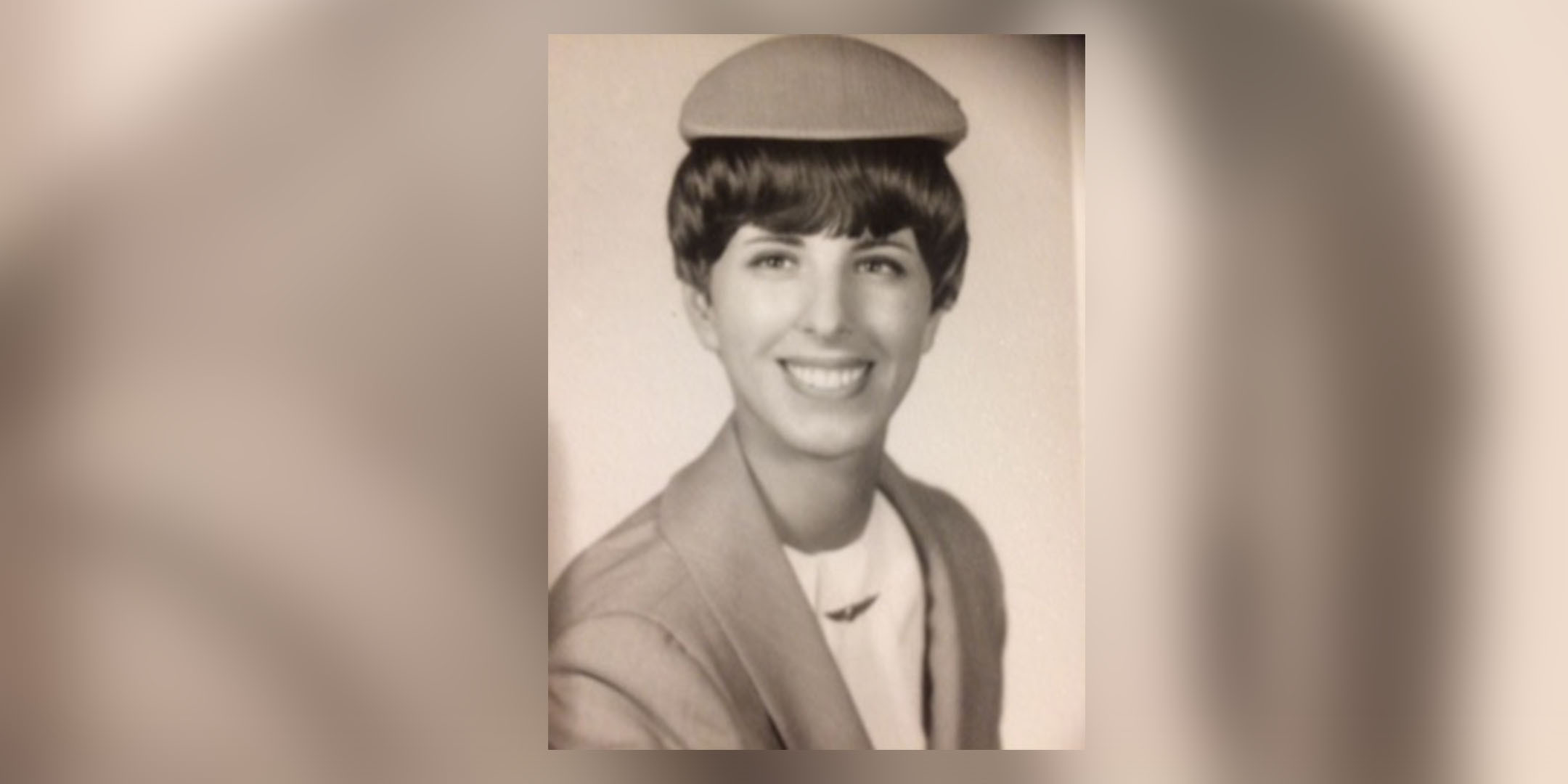
Mary Hoy, who served as a stewardess aboard United Airlines from 1967-1973, was a guest on The Flight Deck podcast back in 2018. She answered questions from the Museum’s social media followers about the flight attendant life and the biggest changes in commercial aviation since the “Golden Age of Flying.” You can check out the full episode “The Stewardess' Tale” here.
Refresh your memory on these five facts we learned from her Ask My Anything (AMA). Then, go see a United Airlines uniform from Hoy’s time in the skies. Affectionately known as “The Skimmer,” the Jean Louis-designed A-line dress is currently on display in the Museum’s limited-time exhibit, Runway to Runway.
Fact #1: Flight attendants witnessed dramatic changes in aircraft design.
When Hoy began, United Airlines was still operating the Douglas DC-6, Convair CV-340, Boeing 747, and other iconic, now-retired aircraft. Want to check out one of the planes that Hoy flew on? Come aboard the 747 next time you’re at the Museum.
Fact #2: Flight attendants enjoyed the perks—and quirks—of serving aboard the Boeing 747.
The double-decker, 300+ passenger plane was so humongous, Hoy recalls, that you had to take a single-person elevator to get to the galley downstairs. She and her fellow flight attendants would hang out in the lower level, especially when all the passengers were sleeping and work was scarce, but they were required to stay awake on the job.
Fact #3: The “Golden Age of Flying” was golden in at least one way: more in-flight food and drink!
When Hoy was a flight attendant, even short flights included far more meal and drink breaks than they do today. One time, Hoy was rushing through the cabin, trying to serve everyone promptly, when a little boy stuck his arm out into the aisle. After multiple warnings, she told him, “Listen. You do that again, I'm going to make you get up and help me.”
Fact #4: Men entering the flight attendant profession changed the field forever.
During Hoy’s day, the field was female-dominated, as it had been since Ellen Church became the first female flight attendant in the 1930s. The lone exception was United employing Hawaiian male flight attendants on their flights between Hawaii and the mainland U.S. Ultimately, the landmark legal case Diaz v. Pan American World Airways (1971) ruled that under the 1964 Civil Rights Act, airlines could not bar men from working as flight attendants. This change had many ripple effects, including the term “stewardess” falling out of fashion in favor of the gender-neutral “flight attendant.” Hoy recalls another consequence of the sudden influx of men into her workplace: airlines abandoned their stringent weight requirements for flight attendants.
Fact #5: Workplace conditions have changed for the better.
When Hoy was flying in the late ’60s and early ’70s, she and her fellow flight attendants “just accepted things as they were,” she recalls. Still, the daily grind of sexist, demeaning comments from passengers and crew alike did wear on her. Shortly after airlines began allowing men to become flight attendants, her captain, a “crusty, old guy,” told her, "I don't know why a man would stoop so low to do a woman's work." Hoy never forgot the insult. She would go on to take flying lessons, secure multiple ratings, and join the FAA, always wondering what the captain would have to say about her accomplishments.
Keep checking the Blog for more entries in the Jet Age Feminism series.

